The Gently blog
Common Wording Mistakes When Writing a Useful Subject Line
Discover common mistakes that weaken email subject lines and learn how to make your messages clearer and more effective with practical examples.
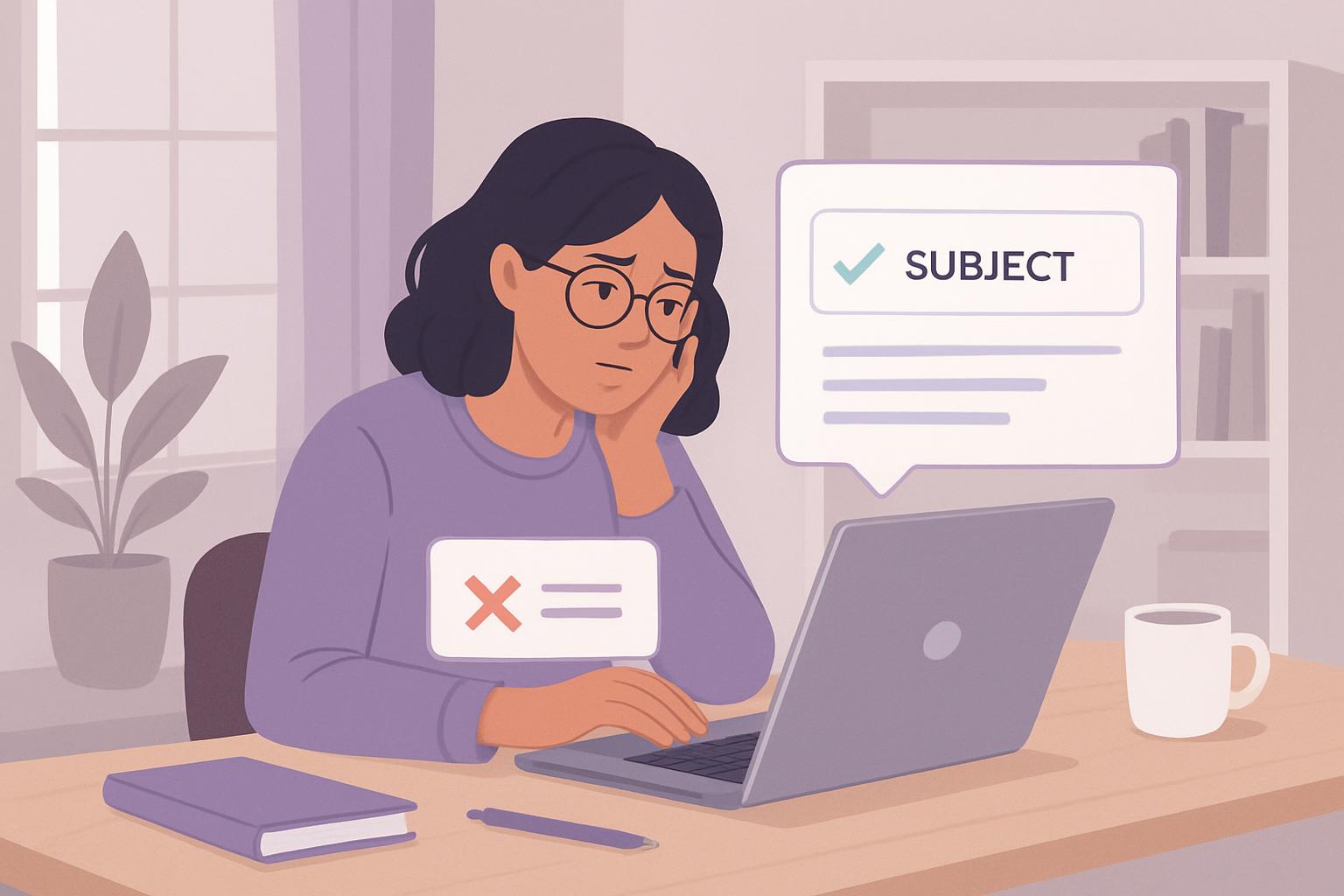
Start Strong: Why Subject Lines Matter
The subject line is your chance to make a first impression with any email, message, or comment. Whether you are reaching out to a colleague, responding to a support request, or following up on a project, your subject line should quickly let readers know what to expect. The right wording helps your message get noticed and acted on, while common mistakes can lead to confusion or ignored emails.
Mistake 1: Being Vague or Generic
A vague subject line leaves the reader guessing about the purpose of your message. Phrases like "Quick Question" or "Update" do not give enough information, especially when your recipient’s inbox is busy. Specific wording makes it much easier for someone to prioritize and respond more quickly.
Fictional Example:
Before: Quick Question
After: Question About Report Deadline for Friday
The improved version clearly states what the question is about and helps the recipient scan and sort their messages easily.
Mistake 2: Using Lengthy or Complicated Wording
Long or complicated subject lines can be hard to read at a glance and may be cut off in many inboxes. Try to keep your wording brief and direct. Avoid unnecessary words or details that could be explained in the body of your message.
Fictional Example:
Before: Following Up Regarding the Previous Meeting We Had Last Thursday
After: Follow-Up: Last Thursday’s Meeting
The revised version is shorter, easier to understand quickly, and still communicates the key point.
Mistake 3: Forgetting Key Details
Sometimes, subject lines miss essential information like dates, document names, or topics. This omission can leave your recipient unsure about which message to open first or which task to prioritize. It also increases the risk of misunderstanding.
Fictional Example:
Before: Question About the Presentation
After: Question: Slides for 12 June Client Meeting
Adding the date and context helps your subject line stand out and immediately improves clarity.
Mistake 4: Sounding Too Abrupt or Too Informal
While being friendly is important, subject lines that are overly casual or, conversely, very abrupt may not be received as intended. Balance is key. A simple greeting or direct wording that fits the relationship and context works best.
Fictional Example:
Before: Hey! Got Those Docs?
After: Request: Documentation for Project Review
The improved subject line is more neutral and professional, while still making the request clear.
Mistake 5: Overusing Urgency or Importance Markers
Many senders add words like "URGENT," "IMPORTANT," or excessive punctuation in subject lines. Overuse makes it hard for truly urgent cases to stand out and may cause recipients to ignore them. Save urgent language for time-sensitive situations and explain the need clearly if you do use it.
Fictional Example:
Before: URGENT!!! Need Your Response ASAP!!!!
After: Response Needed by 3 PM Today
This approach gives a specific deadline rather than relying on emotional urgency, making it easier for the recipient to respond appropriately.
Write With Clarity and Care
Subject lines are small but powerful. Clear, specific, and appropriately toned subject lines help everyone communicate and work better, especially when messages are important or time-sensitive. If you ever struggle to find the right words, tools like writing assistants can help refine your subject lines where you type, making your communication clearer, more concise, and more effective.
To discover more ways to improve your everyday writing in emails, forms, and messages, consider exploring digital tools designed for effective communication.
Explore Gently for help with everyday writing.
Discover Gently